Living in a small apartment does not mean you have to live in clutter. It just means your storage has to work harder than it would in a bigger home. Most storage advice fails in real apartments because it assumes you have a spare room, a garage, or permission to drill into every wall. This guide is different. Every idea here works in a rental, costs little, and can be set up in an afternoon.
The trick is to stop thinking about buying more bins and start thinking about where the wasted space already is. In most small apartments, the wasted space is above your head, behind doors, under the bed, and inside furniture you already own. Use those spots first, and the whole place starts to feel bigger.
Start With a Ruthless Declutter
No storage system can fix having too much stuff. Before you buy a single shelf, spend one hour with three bags: keep, donate, and trash. Go room by room and be honest. If you have not used something in six months and it has no real sentimental value, it is taking up space that your daily essentials need.
A good rule for small apartments is one in, one out. Every time something new comes home, something old leaves. This sounds strict, but it is the only way to stop clutter from creeping back. Small spaces have no margin for "just in case" items. If you are keeping something just in case, store it in one clearly labeled box, and if you do not open that box in six months, donate the whole thing.
Decluttering also shows you what you actually need to store. You might discover that half your clutter is paperwork, or cables, or winter clothes with nowhere to go. That tells you exactly which storage to buy instead of guessing.
Use Your Walls, Not Your Floor
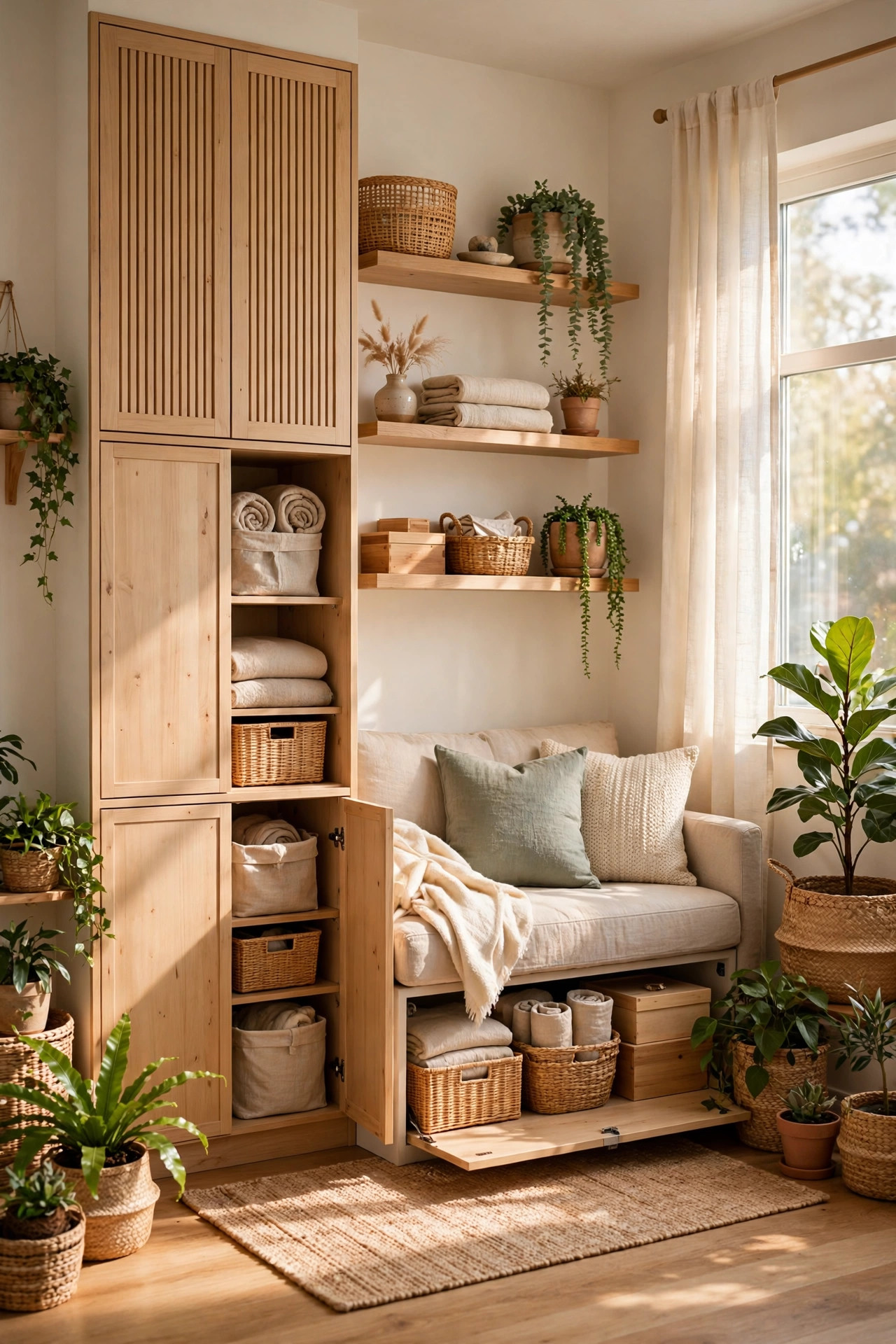
Floor space is the most precious thing in a small apartment, so get things off the floor and onto the walls. Floating shelves are the classic move, and they work because they use the empty space above furniture. A shelf above a desk holds books and plants. A shelf above a door holds out of season items. A shelf in that awkward gap above the sofa holds the things you reach for every day.
If your landlord will not allow drilling, use heavy duty adhesive strips and hooks rated for the weight you need. Command style strips hold frames, small shelves, and organizers well on smooth painted walls. For heavier shelves, look for freestanding ladder shelves that lean against the wall. They need no holes at all and they give you four or five levels of storage in a footprint smaller than a side table.
Pegboards are another wall option that renters love. A pegboard in a hallway or home office holds keys, bags, headphones, and small tools, and you can rearrange the hooks whenever your needs change. A small pegboard costs around 20 to 40 dollars, and it replaces a whole junk drawer.
Make Your Furniture Work Twice
In a small apartment, every piece of furniture should do at least two jobs. A storage ottoman holds blankets, board games, or extra shoes, and it works as a seat and a footrest. A bed frame with drawers underneath, or even simple under bed storage boxes on wheels, can hold an entire season of clothes. A coffee table with a lift top hides laptops, chargers, and magazines.
If you are buying new furniture, measure first and choose pieces with built in storage. A narrow console table with drawers beats a decorative table every time. A bench at the foot of the bed with a hinged lid beats a plain bench. The price difference is often small, often 20 to 50 dollars more, but the storage gain is huge.
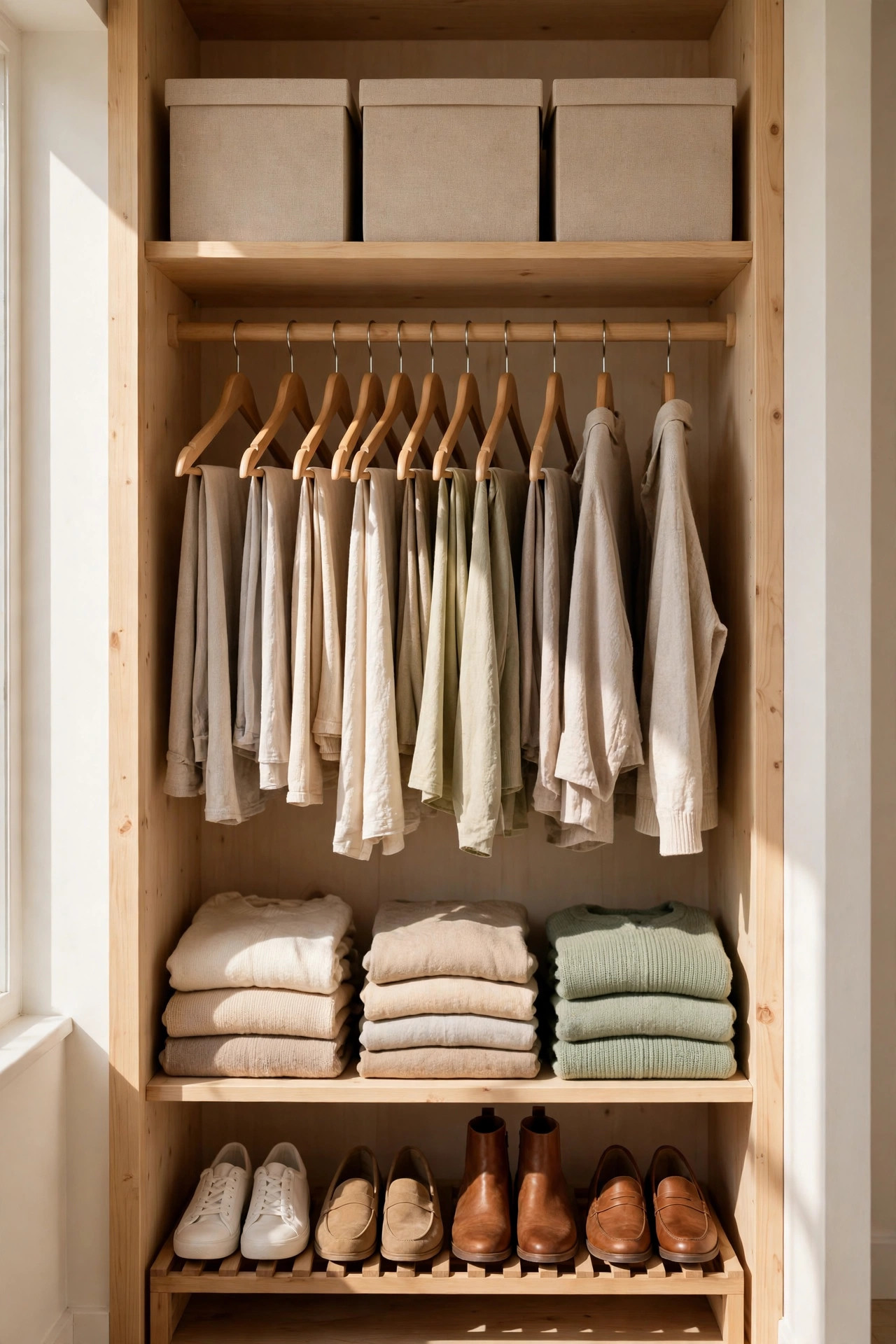
For furniture you already own, add storage inside it. Drawer dividers turn one messy drawer into six tidy compartments. Small boxes inside a wardrobe separate socks, belts, and accessories. A hanging organizer on the back of a closet door holds shoes, scarves, or cleaning supplies without taking any floor space at all.
The Overlooked Spots That Hold the Most
Some of the best storage in a small apartment is in places you walk past every day. The space above kitchen cabinets holds large platters and appliances you use rarely. The top of a wardrobe holds suitcases and seasonal bedding. The inside of cabinet doors holds spice racks, measuring cups, and cleaning spray bottles on adhesive hooks.
Behind every door is a storage opportunity. Over the door hooks hold coats, towels, and bags. Over the door shoe organizers are not just for shoes. Cut the pockets to size in your mind and use them for pantry items, craft supplies, toiletries, or cleaning products. One organizer costs around 10 to 15 dollars and adds the equivalent of a small shelf.
Under the bed deserves a second look too. Flat, lidded boxes keep dust out and slide easily. Label each box on the end you can see, so you are not pulling out all four to find one thing. Rolling under bed boxes cost around 15 to 30 dollars for a set, and they are one of the cheapest ways to add a whole closet worth of space.
Organize by Zone, Not by Room
Small apartments work better when you organize by activity rather than by room. Create a zone for getting out the door, a zone for working, a zone for relaxing, and a zone for cooking. Each zone holds only what that activity needs.
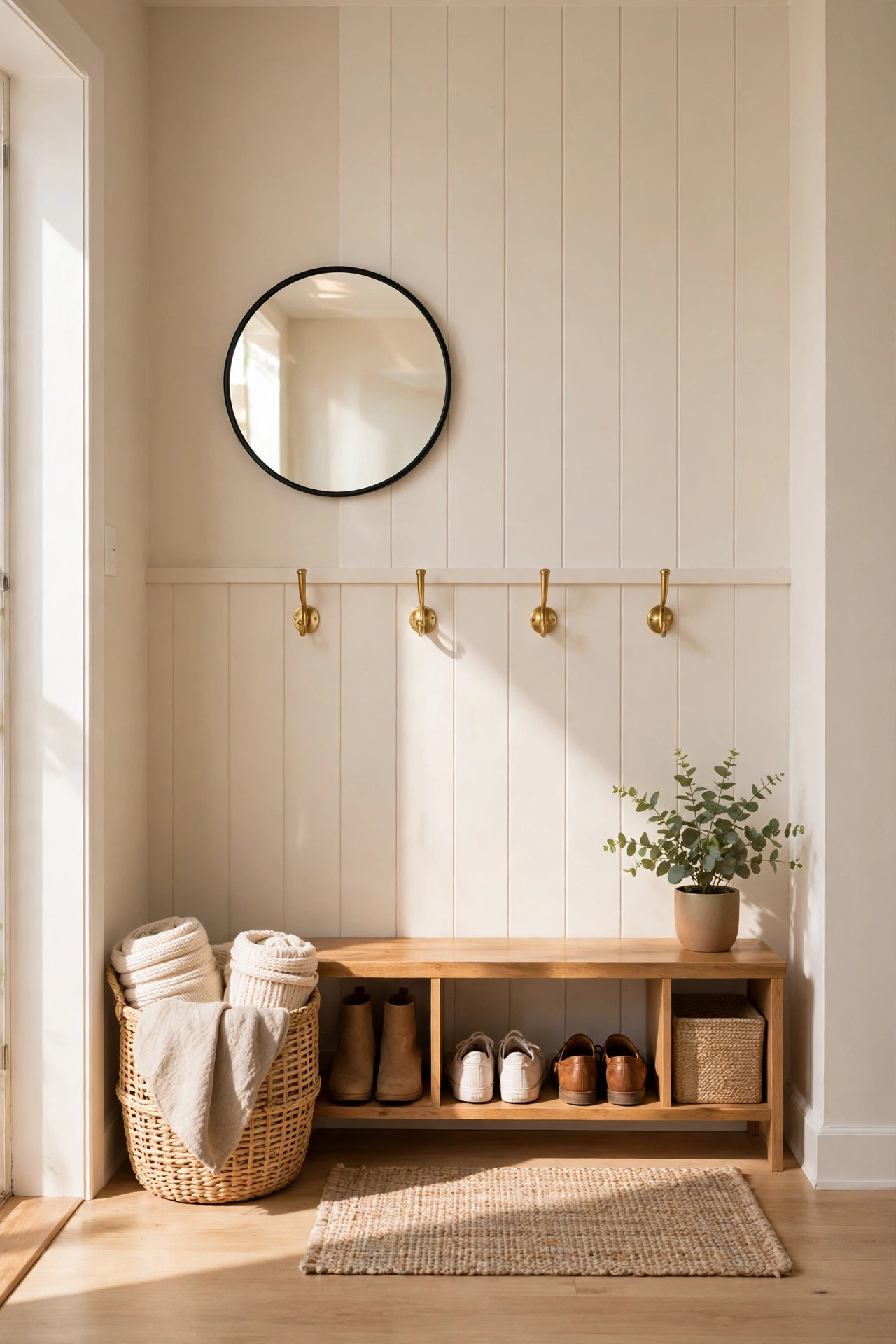
Your entryway zone might be one wall hook, a small tray for keys, and a basket for shoes. Your work zone might be a single shelf above your desk with everything you use daily. When each zone has a clear home for its items, things stop migrating around the apartment and piling up on the kitchen counter.
Use baskets and bins to define each zone. Open baskets are best for things you grab often, like dog leashes or gym clothes. Lidded boxes are best for things you want out of sight, like paperwork or spare cables. Keep the bins consistent in color and size so the room looks calm instead of chaotic. Mismatched containers are one of the fastest ways to make a tidy room look messy.
Small Habits That Keep It Working
Storage is only half the battle. The other half is daily habits that take less than five minutes. Put things back where they live the moment you finish using them. Do a quick ten minute reset each evening, clearing counters and putting stray items away. Keep a small donation bag in your closet so you can drop things in whenever you notice you no longer need them.
A nightly reset sounds boring, but it is what separates apartments that stay tidy from apartments that look great for one weekend and then slide back. Set a timer for ten minutes. You will be surprised how much you can put away in that time when everything already has a home.
What to Buy First
If your budget is tight, buy in this order. First, under bed storage boxes, because they add the most space for the least money. Second, over the door hooks and organizers, because they use space you are already wasting. Third, a set of matching baskets or bins for the zones you use most. Fourth, one freestanding shelf or ladder shelf for the room that feels most crowded. You can build a complete system for around 75 to 150 dollars, spread over a few weeks if needed.
Avoid buying storage before you know what goes in it. Measure the space, measure the items, and then buy the container that fits. A beautiful basket that does not fit your shelf is just more clutter.
Small apartment living gets easier when your home works with you instead of against you. Start with the declutter, claim the wall and under bed space, give every item a zone, and keep up the ten minute nightly reset. Within a week, the same apartment will feel calmer, bigger, and much easier to live in.