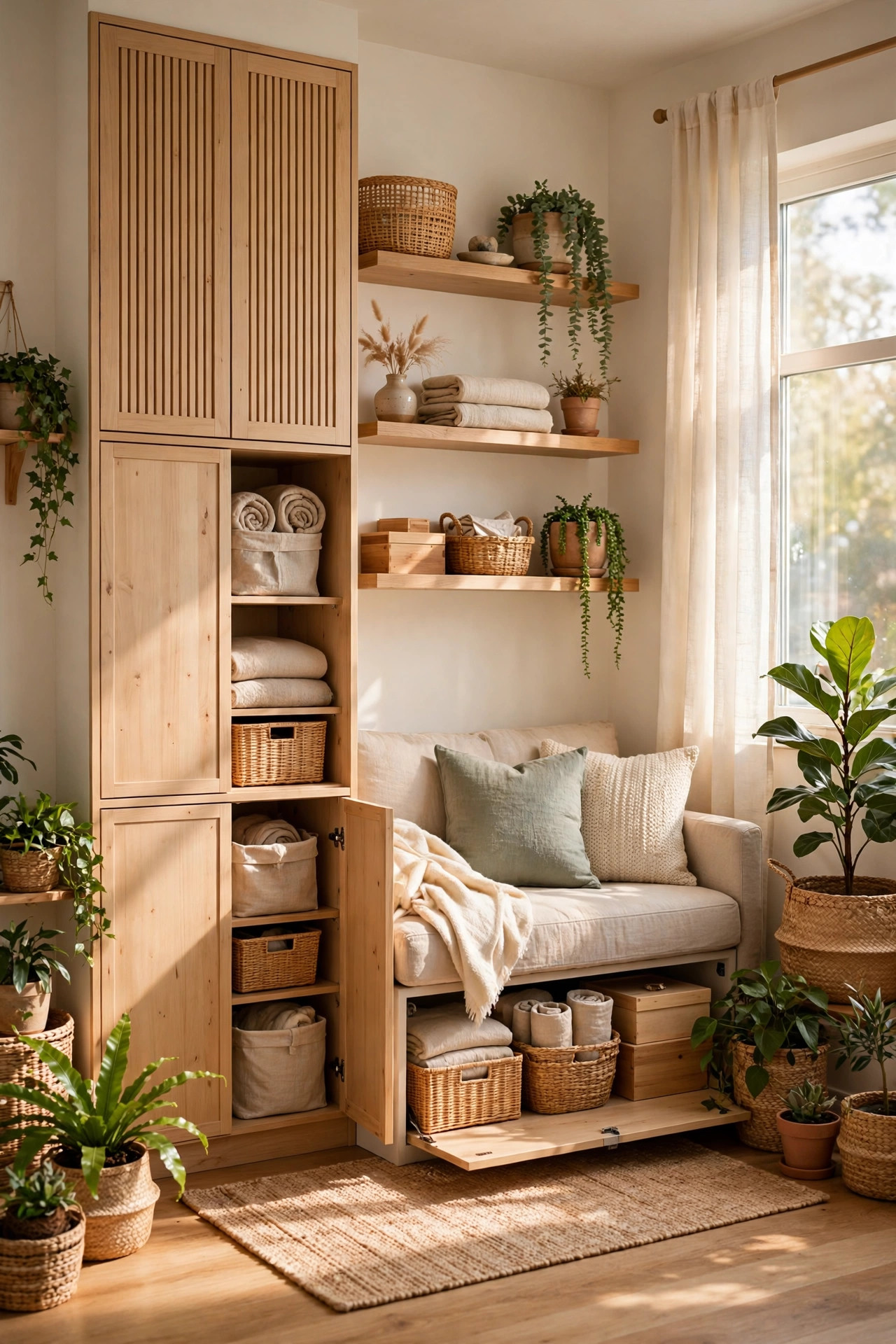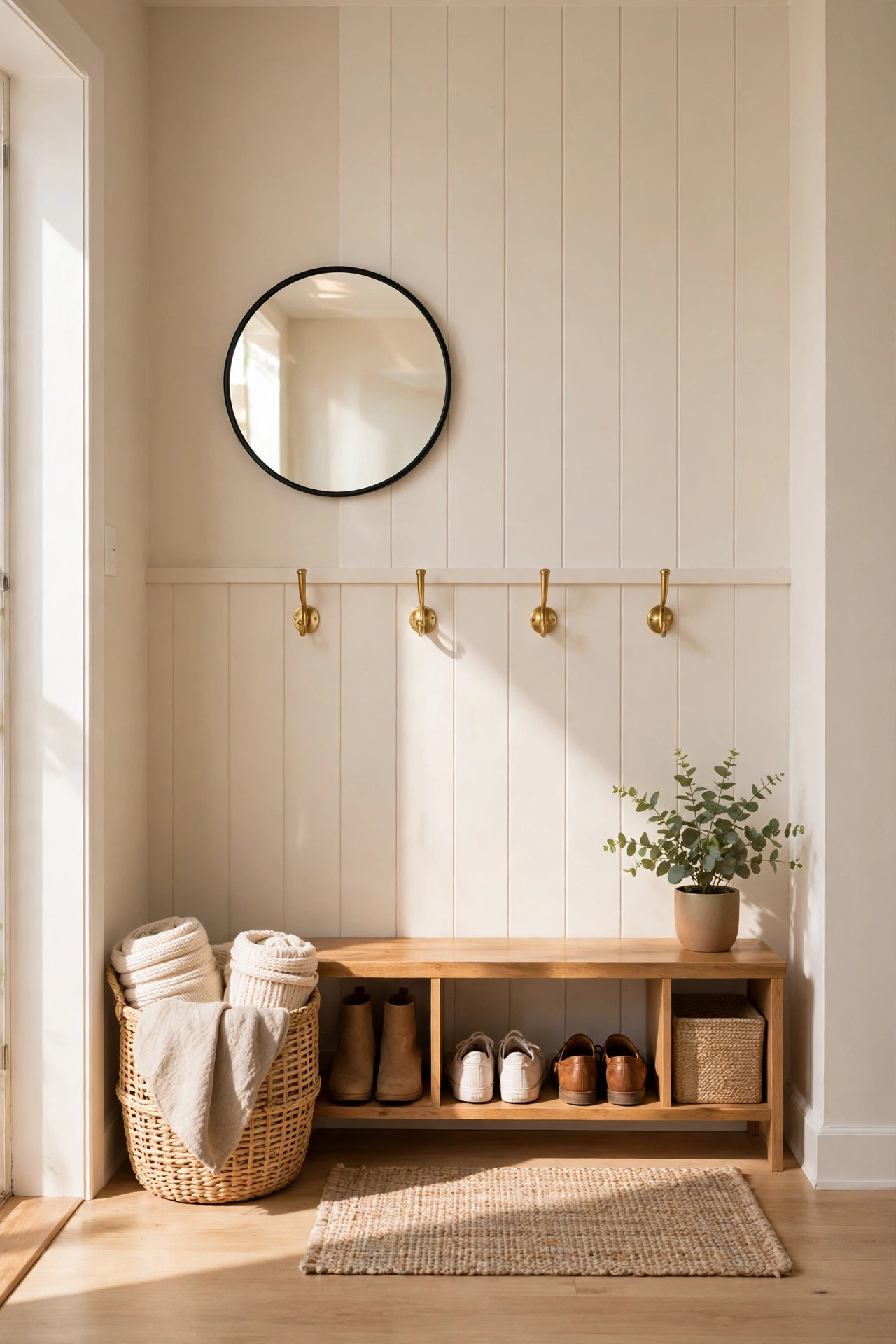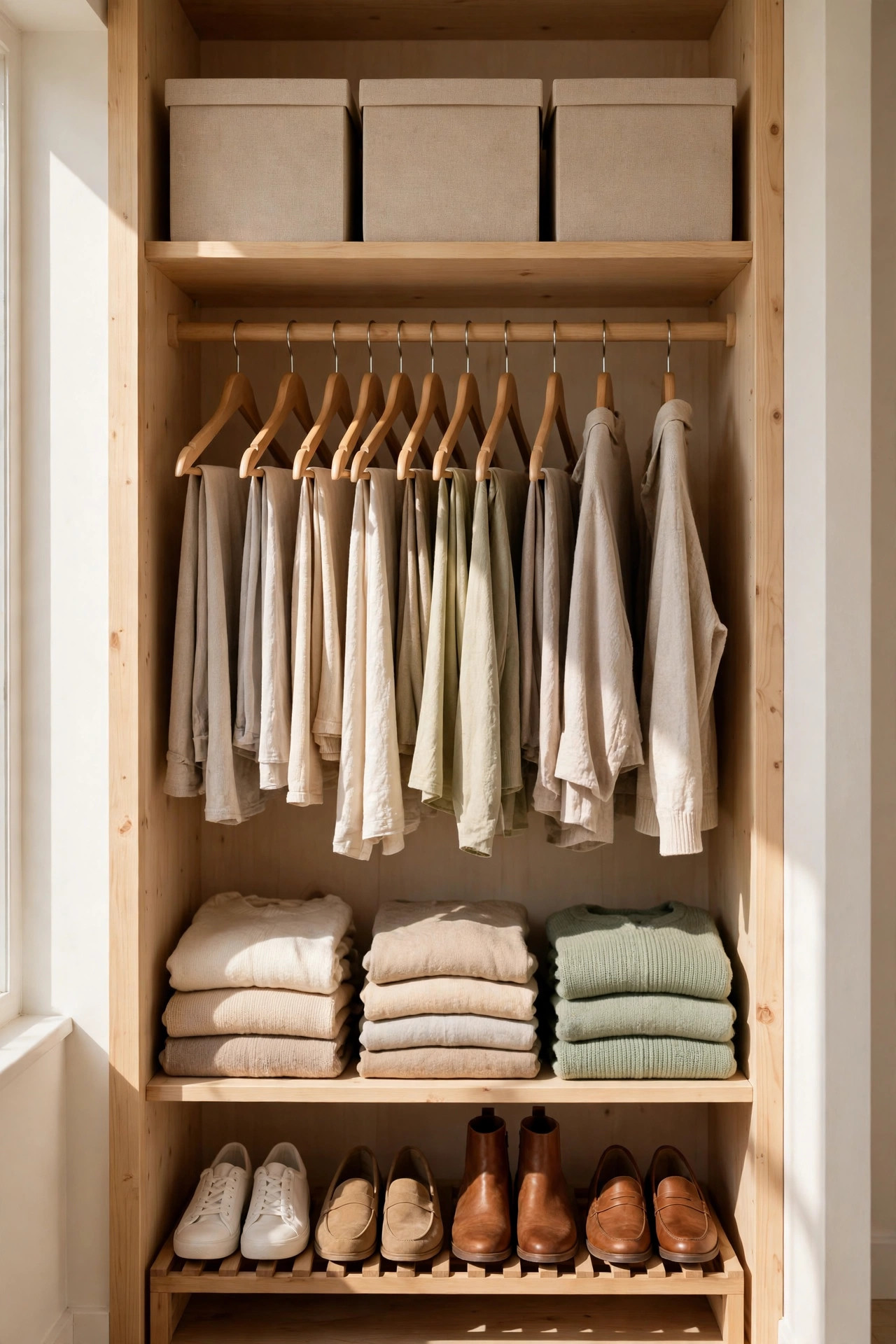
A tiny closet feels like a puzzle with too many pieces and not enough room. Clothes get crushed, you cannot find anything, and getting dressed in the morning takes longer than it should. The fix is not a bigger closet. It is a better system inside the one you have.
Most tiny closets waste space in the same three ways: one long hanging rod with empty air above and below it, shelves with no dividers where stacks collapse, and a floor covered in shoes and bags. Solve those three problems, and you can often double the usable space without spending much.
Empty It and Edit Ruthlessly
Take everything out of the closet. Yes, everything. Lay it on the bed and sort it honestly. Keep the clothes you wear regularly and that fit well. Donate the clothes that are worn out, do not fit, or you have not worn in a year. Put seasonal clothes in a separate pile to store elsewhere.
A useful test is to turn all your hangers around so the hooks face outward. Each time you wear something, turn the hanger back the normal way. After three months, any hanger still facing outward holds something you do not wear. That is your donation pile.
Be realistic about how many clothes you need. Most people wear the same 20 to 30 outfits on repeat. A tiny closet works best when it holds your real wardrobe, not your aspirational wardrobe. If you have clothes for a life you do not live, they are taking space from the clothes you actually wear.
Double Your Hanging Space
The single best upgrade for a tiny closet is a second hanging rod. Most closets have one rod at about 5 feet high, with a shelf above it and a lot of empty space below. Adding a second rod below the first, at about 3 feet high, doubles your hanging space for shirts, blouses, and folded trousers.
You can buy an adjustable double hanging rod that hooks onto the existing rod with no tools and no drilling. It costs around 15 to 25 dollars and takes five minutes to install. Hang shirts and short items on the top rod, and trousers and skirts on the bottom rod. Long items like dresses and coats stay on the original rod at one end, or on the top rod if you leave a section without the second rod.
Use slim, matching hangers. Bulky plastic and wooden hangers take up far more rod space than slim velvet hangers, and mismatched hangers make the closet look messy even when it is tidy. A pack of 30 slim velvet hangers costs around 10 to 15 dollars, and it can free up several inches of rod space.
Hang clothes by category and by color. Shirts together, trousers together, dresses together, and within each group, light to dark. It sounds fussy, but it means you can find what you want in seconds, and the closet looks calm instead of chaotic.
Make the Shelves Work Harder
The shelf at the top of most closets is a dumping ground because it is deep and hard to reach. Shelf dividers fix the collapsing stack problem. A set of wire or acrylic dividers costs around 10 to 20 dollars and keeps folded clothes in neat stacks. Fold clothes the same size every time, using the same folding method, so the stacks stay even.
Use the top shelf for out of season clothes, spare bedding, or bags you use rarely. Put those items in labeled boxes or bins so you can pull down one box instead of digging through a pile. Clear bins let you see what is inside. Fabric bins look tidier. Choose whichever fits your style, but label them either way.
Add a small shelf or a hanging organizer for the vertical space. A hanging shelf organizer that attaches to the rod gives you four to six cubbies for folded clothes, accessories, or shoes. It costs around 10 to 20 dollars and needs no tools. Use it for the items you reach for often, like t-shirts, workout clothes, or scarves.
Win Back the Closet Floor
The floor of a tiny closet is usually a pile of shoes and bags. A simple shoe rack changes that. A two tier shoe rack costs 15 to 25 dollars and holds 8 to 12 pairs in the same footprint as a pile of four. A stackable shoe organizer does the same job and can grow as your shoe collection grows.
Store shoes you wear rarely, like formal shoes or seasonal boots, in boxes on the top shelf. Keep only the shoes you wear weekly on the floor rack. The same rule applies to bags. Keep one or two daily bags on a hook inside the closet door, and store the rest on the top shelf.
If your closet floor has space below the lowest hanging clothes, use it. Small rolling drawers or flat bins under hanging clothes hold accessories, underwear, or workout gear. A narrow set of drawers that fits under the hanging rod can replace a whole dresser in a tiny bedroom.
Use the Closet Door
The inside of the closet door is free storage. An over the door hook holds bags, belts, and scarves. A hanging shoe organizer holds shoes, but it also holds accessories, ties, belts, and small items in its pockets. A small mirror on the inside of the door saves you from needing a full length mirror elsewhere in the room.
Adhesive hooks on the inside of the door hold necklaces and hats without damaging anything. Just make sure the hooks do not stop the door from closing, and do not hang anything so heavy that it pulls the door off its hinges.
Accessories, Underwear, and the Small Stuff
Small items cause the most mess in a closet because they have no natural home. Drawer dividers solve this. A set of fabric drawer organizers costs around 10 to 15 dollars and turns one drawer into eight tidy compartments for socks, underwear, belts, and accessories.
If your closet has no drawers, use small boxes or baskets on a shelf. One box for belts, one for scarves, one for jewelry. Label them if the boxes are not clear. Hang belts on a belt ring or a hook, and hang scarves on a scarf hanger or a shower curtain ring attached to a hanger. These tiny fixes stop the daily tangle that makes a closet feel messy.
Jewelry needs its own spot too. A small jewelry tray in a drawer, or a hanging jewelry organizer on the closet door, keeps necklaces from tangling and earrings from getting lost.
Keep It Working With a Seasonal Reset
A tiny closet needs a reset twice a year, when the seasons change. Swap out of season clothes for in season clothes. While you are swapping, check for anything worn out or no longer worn, and remove it. Clean the shelves and the floor. Re-fold anything that has collapsed.
Between resets, follow the one in, one out rule. When you buy a new shirt, donate an old one. When you buy new shoes, remove a pair you no longer wear. This keeps the closet at the same size instead of slowly filling up again.
A tiny closet is not a problem to solve once. It is a system to maintain. Empty it, edit it honestly, add a second rod, divide the shelves, reclaim the floor, and use the door. Do that, and getting dressed in the morning becomes faster, calmer, and even enjoyable. The closet will not be bigger, but it will feel like it is.