Blank white walls make a rental feel temporary, like you are just passing through. But most landlords do not allow drilling, and nobody wants to lose part of their deposit over nail holes. The good news is that you can make a rental feel like home without putting a single hole in the wall. You just need to know which damage free methods actually hold, and which decorating tricks do not need the wall at all.
This guide covers the methods that work, the weight limits to respect, and the ideas that look expensive even though they cost very little.
Adhesive Strips and Hooks That Actually Hold
The foundation of renter friendly wall decor is adhesive hanging strips and hooks. The key is using the right product for the weight and the surface. Small picture hanging strips hold frames up to about 3 pounds. Medium strips hold up to about 9 pounds. Large strips hold up to about 15 pounds. Always check the packet, and always use two strips for anything wide, even if one strip claims to be enough.
Follow the instructions exactly. Clean the wall with rubbing alcohol first and let it dry. Press the strip to the wall for 30 seconds, then press the frame to the strip for another 30 seconds. Wait a full hour before hanging anything heavy. Most failures happen because someone hangs a frame five minutes after sticking the strip on.
Adhesive hooks are just as useful. They hold hats, plants in lightweight pots, string lights, and small baskets. Remove them properly when you move out by pulling the tab straight down slowly. If you yank the hook off, you can peel paint, and that is exactly what you are trying to avoid.
One warning: adhesive strips do not work well on textured walls, brick, or wallpaper. On those surfaces, they either will not stick or they will pull the finish off when removed. Test in a hidden spot first, behind a door or behind furniture, before you commit to a whole gallery wall.
Gallery Walls Without a Single Nail
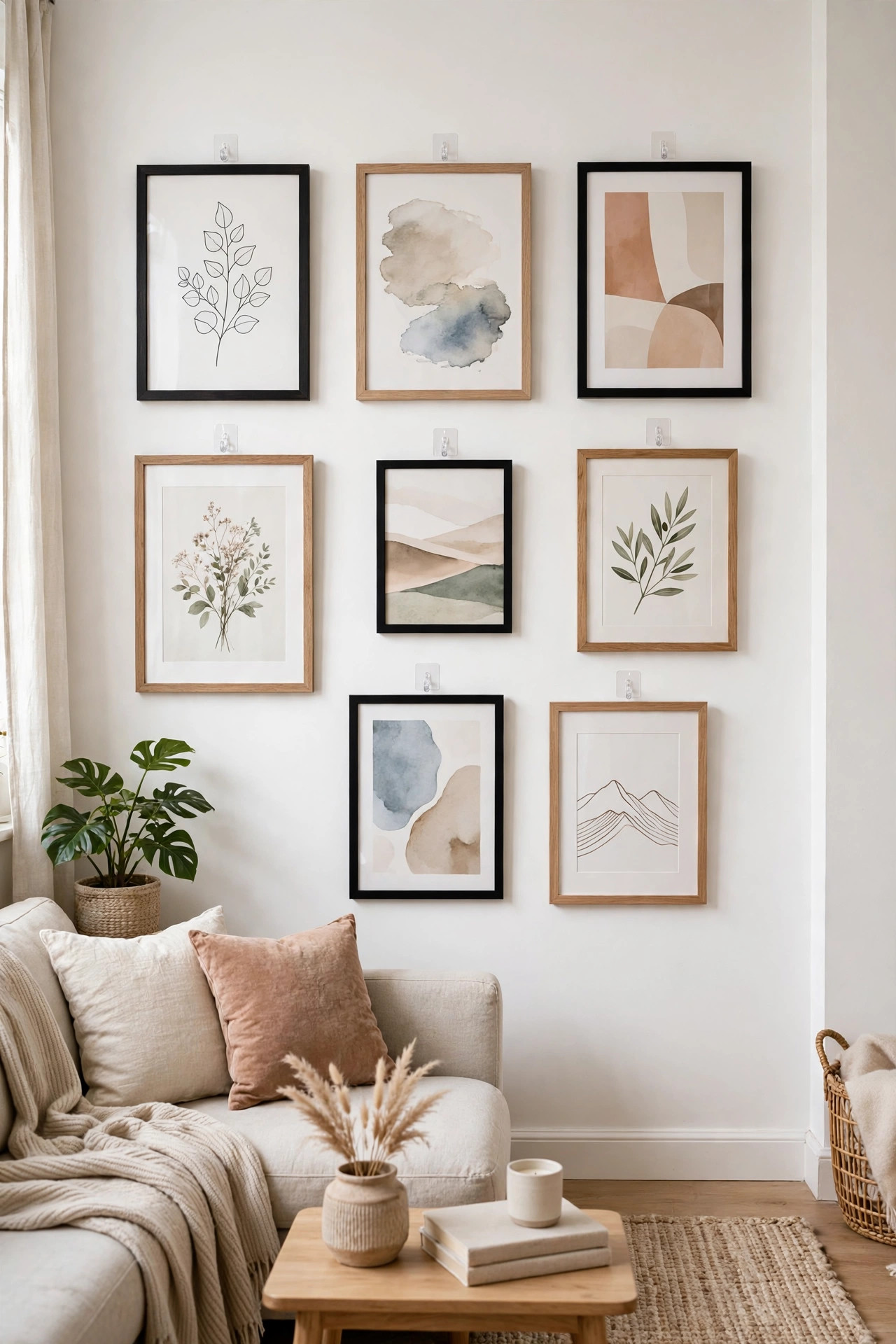
A gallery wall is the fastest way to make a rental feel personal, and it works perfectly with adhesive strips. Plan the layout on the floor first. Lay your frames out on a bed or on the floor and move them around until the arrangement looks balanced. Take a photo of the final layout so you can copy it on the wall.
Mix frame sizes for a lived in look. Two large frames, three medium frames, and a few small ones usually works better than ten identical frames. Mix in one or two non frame pieces, like a small woven wall hanging, a mirror, or a piece of fabric in an embroidery hoop. The variety keeps the wall from looking like a shop display.
Keep the spacing consistent, about 2 to 3 inches between frames. Start with the center frame at eye level, about 57 inches from the floor to the center, which is the standard gallery height. Work outward from there. If you are nervous about placement, cut paper templates the size of each frame and stick them to the wall with painter's tape first. Live with the paper version for a day, then swap in the real frames.
Lean It, Prop It, Stand It
Some of the best wall decor never touches the wall at all. Large art and mirrors look great leaned against a wall on top of a dresser, a console table, or the floor. A tall mirror leaned in a corner makes a small room feel twice as big, and it needs no fixings at all. A large framed print leaned on a sideboard instantly makes a living room feel styled.
Layering works well here. Lean a large frame at the back, a medium frame in front of it to one side, and a small plant or candle in front. The layered look feels intentional and relaxed, and you can rearrange it in seconds.
Picture ledges are another renter favorite. A narrow floating picture ledge does need screws in most cases, but a freestanding plate rack or a small easel does the same job with no wall contact. You can also use the top of a bookshelf as a display ledge, lining up small framed prints along the top edge.
Washi Tape, Decals, and Temporary Wallpaper
Washi tape is a renter's secret weapon. It comes in hundreds of colors and patterns, sticks to painted walls, and peels off cleanly. Use it to create geometric shapes, frame a poster, make a border around a mirror, or create a fake headboard shape on the wall behind your bed. A roll costs around 3 to 8 dollars, and one roll goes a long way.
Removable wall decals are the next step up. They are large vinyl stickers that peel off without residue, and they come in everything from botanical prints to simple dots and arches. They work best on smooth, clean walls. A set costs around 10 to 30 dollars depending on size. Avoid the cheapest decals, because they can leave a sticky film or tear paint when removed.
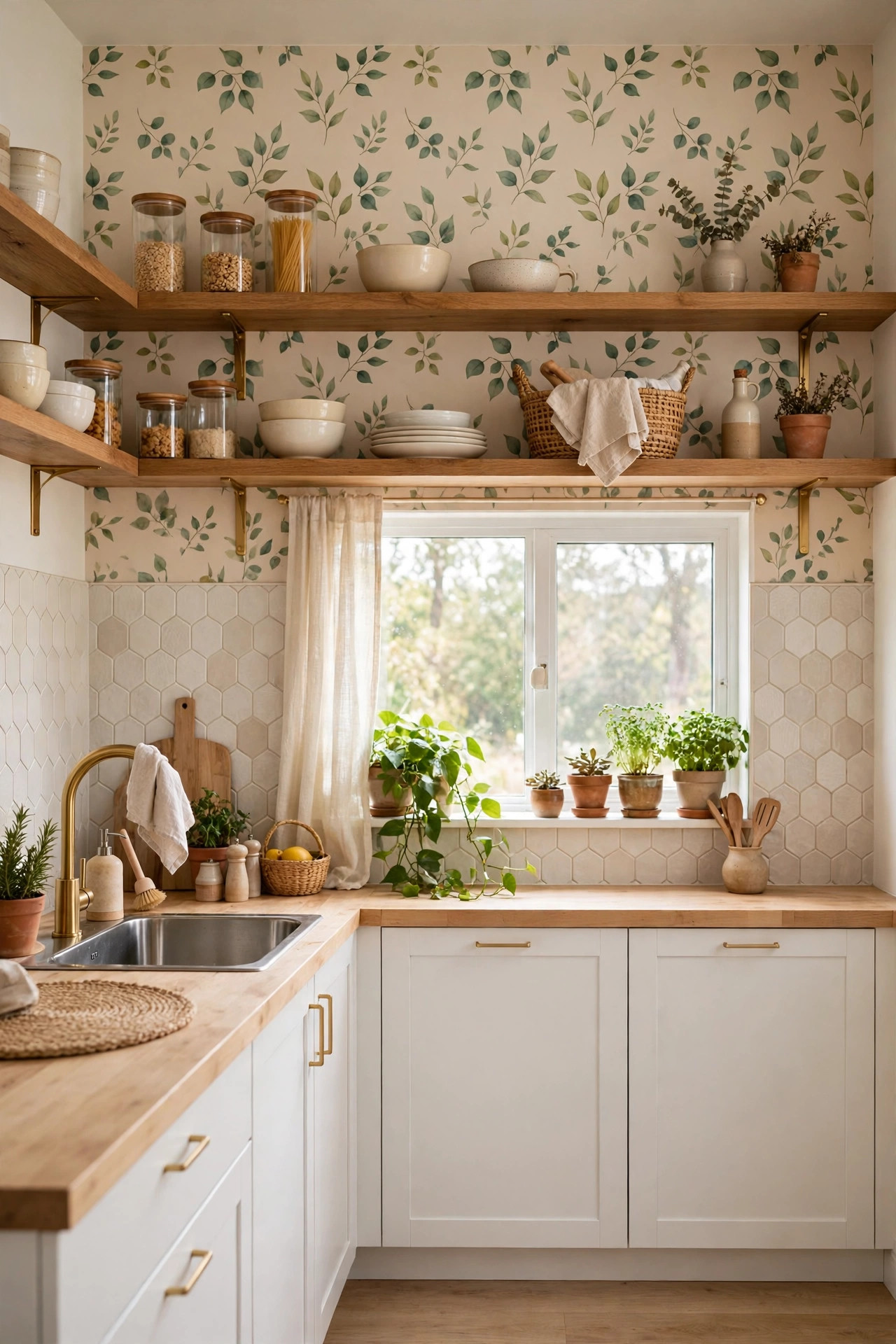
Peel and stick wallpaper is the boldest option. It can transform one accent wall for around 30 to 60 dollars per roll. It is real wallpaper in look and feel, but it peels off when you move. The trick is to apply it slowly, smoothing out air bubbles as you go, and to line up the pattern carefully. Start with a small wall, like a hallway or a bathroom accent wall, before you commit to a whole room. Always test a small piece behind furniture first, because some paints do not release cleanly.
Fabric, Tapestries, and Textiles
Fabric is one of the easiest ways to cover a large blank wall without any holes. A tapestry or a large piece of fabric hung from a tension rod, or clipped to adhesive hooks, adds color, texture, and softness. Tension rods fit inside window frames or between two walls in an alcove, and they hold lightweight fabric easily.
You can also hang fabric with small binder clips attached to adhesive hooks along the top edge. It sounds improvised, but with a neatly folded top edge it looks like a deliberate curtain style hanging. Choose a fabric that fits your room. A light linen or cotton works in a bright living room. A heavier woven textile works in a bedroom.
Macrame wall hangings, woven baskets, and straw hats grouped together also work beautifully and need only one or two adhesive hooks each. A cluster of three woven baskets on a dining room wall costs around 20 to 40 dollars and looks far more expensive than it is.
Mirrors, Lights, and Shelves Without Screws
Mirrors deserve their own mention because they do two jobs at once. They decorate the wall and they bounce light around a small room, making it feel larger. A mirror with a built in stand can sit on a dresser. A tall mirror can lean in a corner. A set of small mirrors can be hung with adhesive strips. Place a mirror opposite a window if you can, because that doubles the natural light.
String lights and LED strip lights add warmth in the evening, and they hang easily from adhesive hooks or clips. Run them along the top of a bookshelf, around a window frame, or behind a headboard. Battery powered fairy lights cost around 8 to 15 dollars and need no outlet nearby. Warm white light looks cozy. Cool white light can feel harsh, so choose warm unless your room is very dark.
Leaning shelves and freestanding bookcases give you wall style without wall damage. A ladder shelf leaned against the wall holds plants, books, and framed photos. A tall narrow bookcase fills an empty corner and gives you five shelves of display space. Both can be found second hand for 30 to 60 dollars, and they move with you when your lease ends.
What to Do Before You Move Out
Keep the packaging for your adhesive strips so you remember which size goes where. When it is time to move, remove everything slowly and carefully. Pull adhesive tabs straight down, not outward. Clean any marks with a damp cloth. If a small mark remains, a magic eraser sponge usually removes it, but test it in a hidden spot first because it can dull some paint finishes.
Take photos of the walls when you move in and when you move out. That gives you proof of the condition you left them in, which protects your deposit.
Your rental does not have to look like a waiting room. With adhesive strips, leaning art, fabric, and a few clever tricks, you can fill your walls with personality and take it all down in an afternoon when it is time to move. Start with one wall, the one you see most, and build from there.