A living room makeover does not need a new sofa or a contractor. Most tired living rooms are not suffering from bad furniture. They are suffering from bad lighting, worn out textiles, cluttered surfaces, and walls that have been blank for too long. Fix those four things, and the room feels brand new, often for under 200 dollars.
This guide gives you a real plan, a real budget breakdown, and the order to do things in so you do not waste money on the wrong step.
The Budget Breakdown
Here is a realistic split for 200 dollars. Adjust the numbers to fit your room, but keep the proportions roughly the same.
Paint or peel and stick wallpaper for one accent wall: 30 to 50 dollars. New cushion covers and a throw blanket: 30 to 45 dollars. A large rug or a rug layering piece: 40 to 60 dollars. Lighting, such as a floor lamp or warm bulbs: 20 to 35 dollars. Wall art and decor: 20 to 30 dollars. Plants, real or good fake ones: 15 to 25 dollars. That totals around 155 to 245 dollars, so shop sales and second hand first to stay under 200.
The point of a budget is to stop impulse buying. If you find a rug for 35 dollars instead of 50, that extra 15 dollars can go toward better cushion covers. Keep a running total on your phone as you shop.
Step One: Clear and Clean First
Before you spend anything, empty the room. Take everything off every surface, pull the sofa away from the wall, and clean properly. Vacuum under furniture, wipe down shelves, wash cushion covers, and clean the windows inside and out. Clean windows alone can make a room feel brighter, because dirty glass blocks a surprising amount of light.
While the room is empty, look at it honestly. What is the focal point? In most living rooms it should be the sofa wall, the TV wall, or a window. Arrange your furniture around that focal point. If the sofa is blocking a walkway or facing a blank wall, move it. Furniture arrangement costs nothing and changes everything.
Take a photo of the empty room. It helps you see the space clearly, and it gives you a before photo you will be glad to have later.
Step Two: One Accent Wall Changes Everything
Paint is the cheapest dramatic change you can make. One accent wall in a warm, deep color makes the whole room feel designed. Good choices for living rooms are warm sage green, soft terracotta, warm greige, or a deep navy if the room gets plenty of light. A gallon of paint costs around 25 to 40 dollars, and one gallon covers one wall easily. You will also need a roller, a brush for edges, and painter's tape, which adds about 10 to 15 dollars if you do not already own them.
If you rent and cannot paint, peel and stick wallpaper gives you the same effect for 30 to 50 dollars per roll. Choose a subtle pattern, not a loud one, so the room still feels calm. One accent wall is enough. Covering all four walls in a bold pattern usually makes a small room feel smaller.
If even wallpaper feels like too much, a large piece of fabric or a tapestry on one wall costs 15 to 30 dollars and adds color and texture with no commitment at all.
Step Three: Textiles Do the Heavy Lifting
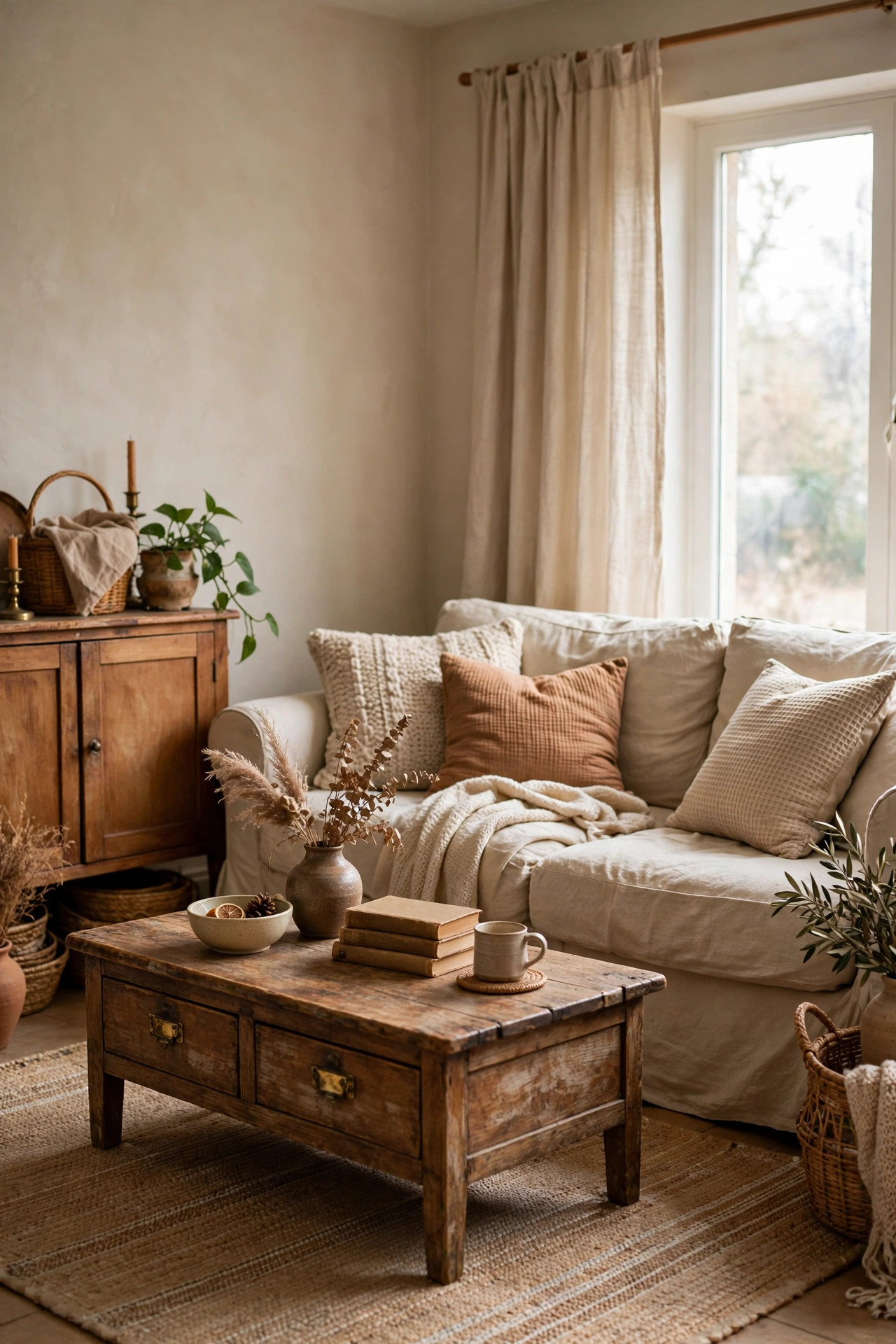
Textiles are where a budget makeover wins. Old cushion covers make a sofa look old, even if the sofa itself is fine. New cushion covers in two or three coordinating colors cost around 5 to 10 dollars each. Choose covers with texture, like linen, velvet, or a chunky knit, because texture reads as expensive. Mix one solid color, one pattern, and one textured neutral. That combination looks styled without trying too hard.
A throw blanket draped over one arm of the sofa adds warmth and color for 15 to 25 dollars. Fold it neatly or drape it loosely, but do not let it look like it was tossed there by accident.
Curtains are the next textile to check. If your curtains are too short, too thin, or the wrong color, they drag the whole room down. Hang curtains high and wide, with the rod 4 to 6 inches above the window frame and extending 4 to 6 inches past each side. This makes the window look bigger and the ceiling look higher. Budget curtain panels cost around 15 to 25 dollars per pair, and they are worth every cent.
Step Four: Fix the Floor
A rug defines the living area and ties the furniture together. The most common mistake is buying a rug that is too small. The front legs of your sofa and chairs should sit on the rug. For most living rooms, that means a rug at least 5 by 7 feet, or 8 by 10 feet for a larger room.
If a new large rug is out of budget, layer a smaller rug over what you have, or buy a budget rug in a neutral color and pattern. Washable rugs are a smart choice if you have pets or kids, and they now come in styles that look nothing like the thin washable rugs from a few years ago. A decent budget rug costs 40 to 60 dollars online or at a discount home store.
If you already have a rug you like, a deep clean can make it look new. Rent a carpet cleaner for a day, or hire a local cleaner, for around 25 to 40 dollars. It is cheaper than replacing the rug and often just as effective.
Step Five: Light It Like You Mean It
Bad lighting makes a good room look flat. Most living rooms rely on one harsh overhead light, and that is the problem. Turn it off in the evening and use three smaller light sources instead: a floor lamp beside the sofa, a table lamp on a side table, and a candle or a string of warm fairy lights.
Warm bulbs matter. Look for bulbs labeled warm white, around 2700 Kelvin. Cool white bulbs make a living room feel like an office. A floor lamp costs 20 to 35 dollars at a discount store, and a pair of warm bulbs costs under 10 dollars. This single change makes the room feel cozy in the evening in a way that no amount of decor can match.
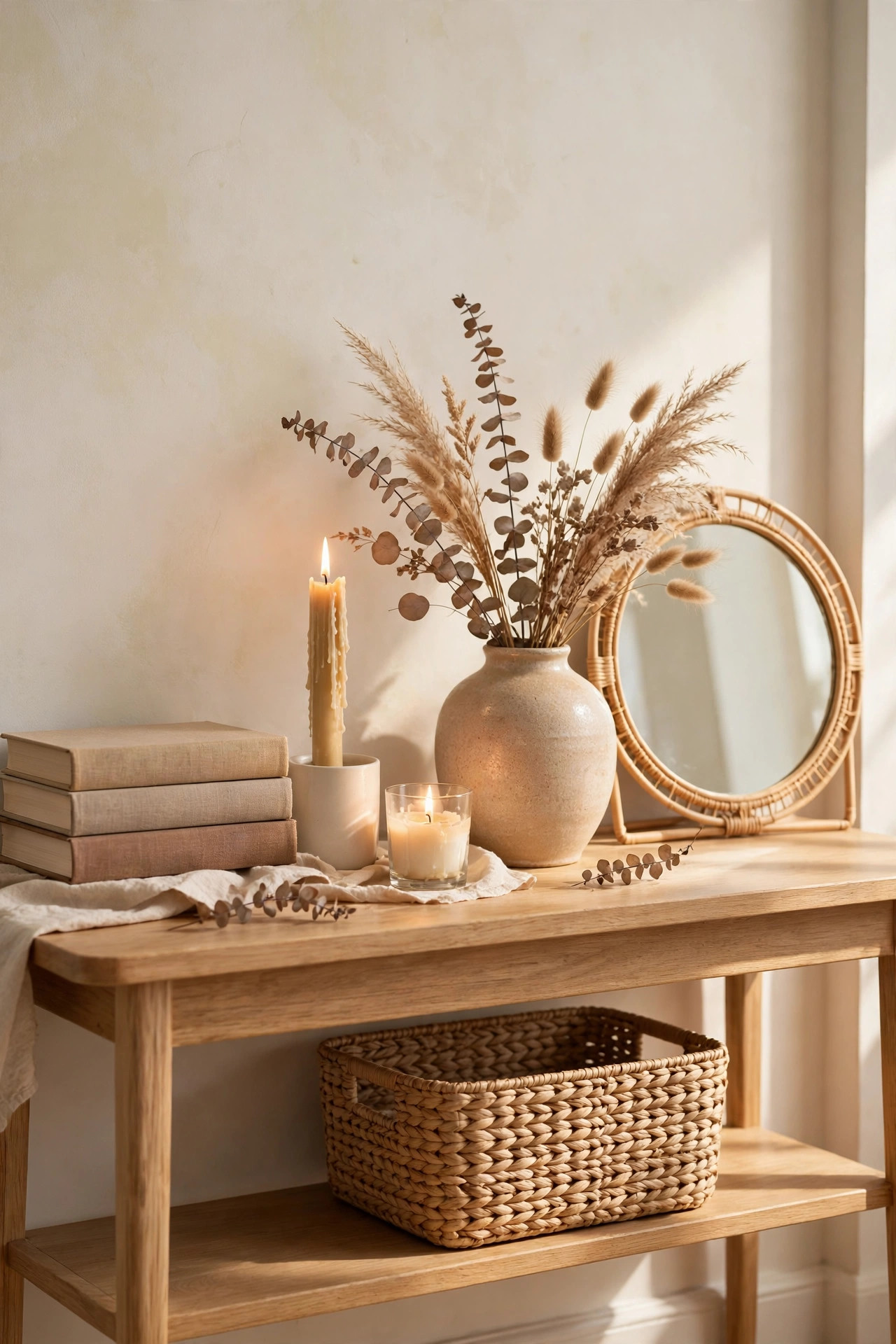
If your room is dark during the day, add a mirror opposite the window. It bounces natural light into the room and makes the space feel bigger. A large leaning mirror costs 30 to 50 dollars second hand, or you can use a set of smaller mirrors for less.
Step Six: Style the Surfaces
Now that the big pieces are done, style the small surfaces. Clear the coffee table completely, then add back only three things: something low and flat like a stack of books, something tall like a small vase or candle, and something natural like a small plant. Three objects of different heights look intentional. Ten objects look like clutter.
Do the same on shelves and side tables. Group items in odd numbers, leave empty space between groups, and remove anything that does not earn its place. If you have too many decorative items, put half of them in a box and rotate them every few months. The room will feel fresh without you buying anything new.
Wall art is the last step. One large piece above the sofa beats five small random frames. If you cannot afford large art, frame a piece of fabric, a calendar page, or your own photo printed large at a print shop. A large print costs 10 to 20 dollars to print and frame, and it looks far more expensive than a small generic poster.
Plants Make It Feel Alive
Plants are the finishing touch that makes a room feel lived in. If you struggle to keep plants alive, start with a snake plant, a pothos, or a ZZ plant. They survive low light and forgetful watering. A small potted plant costs 8 to 15 dollars. A larger floor plant costs 20 to 30 dollars. If real plants truly are not for you, one good quality fake plant is better than three cheap ones that look plastic from across the room.
Put plants at different heights: one on the floor, one on a shelf, one on a side table. The variety draws the eye around the room and makes the space feel layered.
The Order That Saves Money
Do the free steps first: clean, rearrange, declutter. Then paint or wallpaper. Then textiles and rug. Then lighting. Then styling and plants. This order matters because you might discover you do not need something you planned to buy. Maybe the room looks great once the sofa is moved and the windows are clean. Maybe the old rug looks fine once the new cushions are in place.
Shop second hand first for the big items. Thrift stores, local buy and sell groups, and clearance sections are full of lamps, mirrors, frames, and rugs in good condition. A 30 dollar second hand floor lamp leaves you 30 dollars for something else. Check the item carefully before you buy it, and clean it thoroughly when you get home.
A 200 dollar makeover will not give you a magazine cover room, and it does not need to. It will give you a room that feels fresh, calm, and like yours. Start with the free steps this weekend, buy the paint and textiles next, and finish with lighting and plants. In two weekends, your living room will feel like a different room.