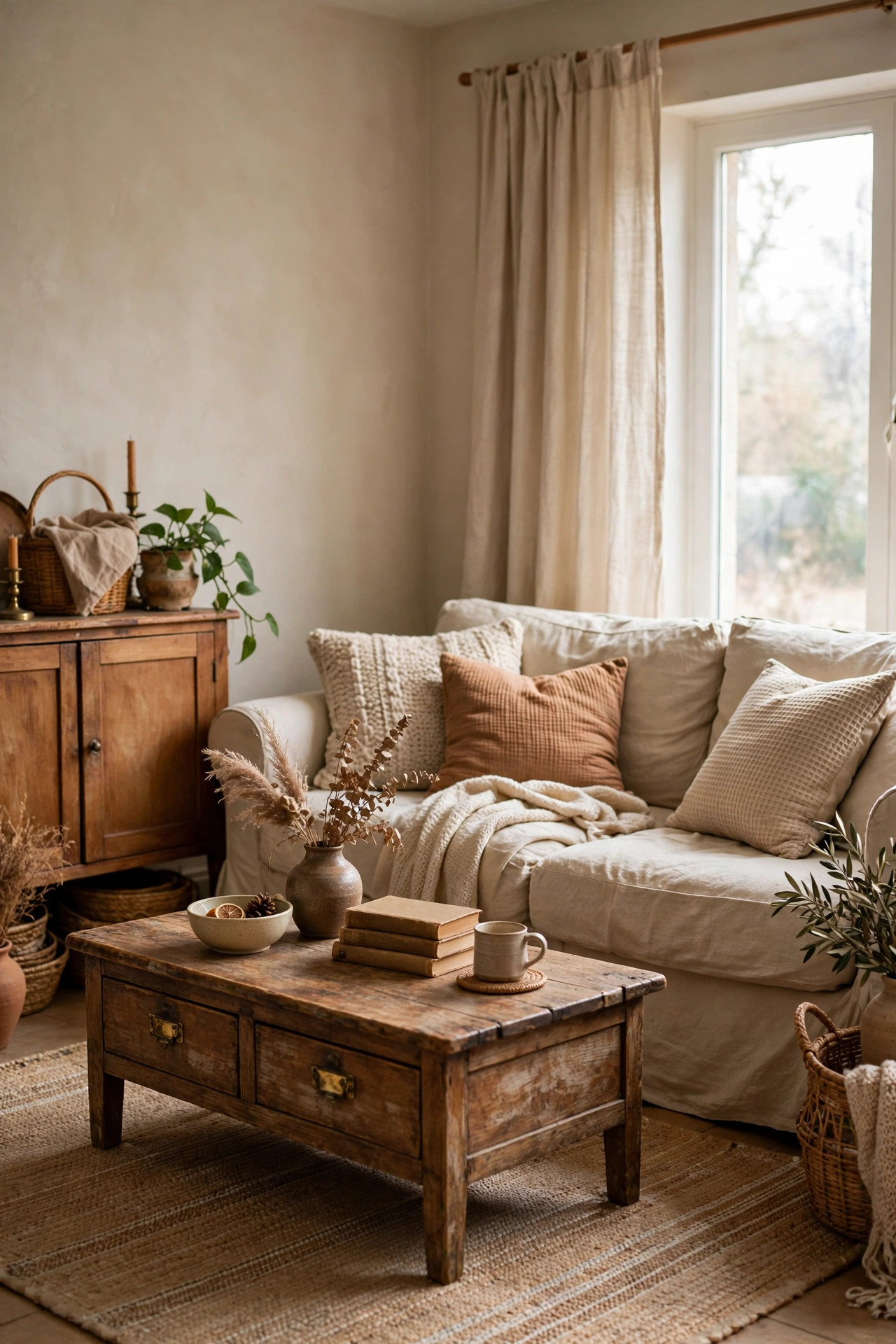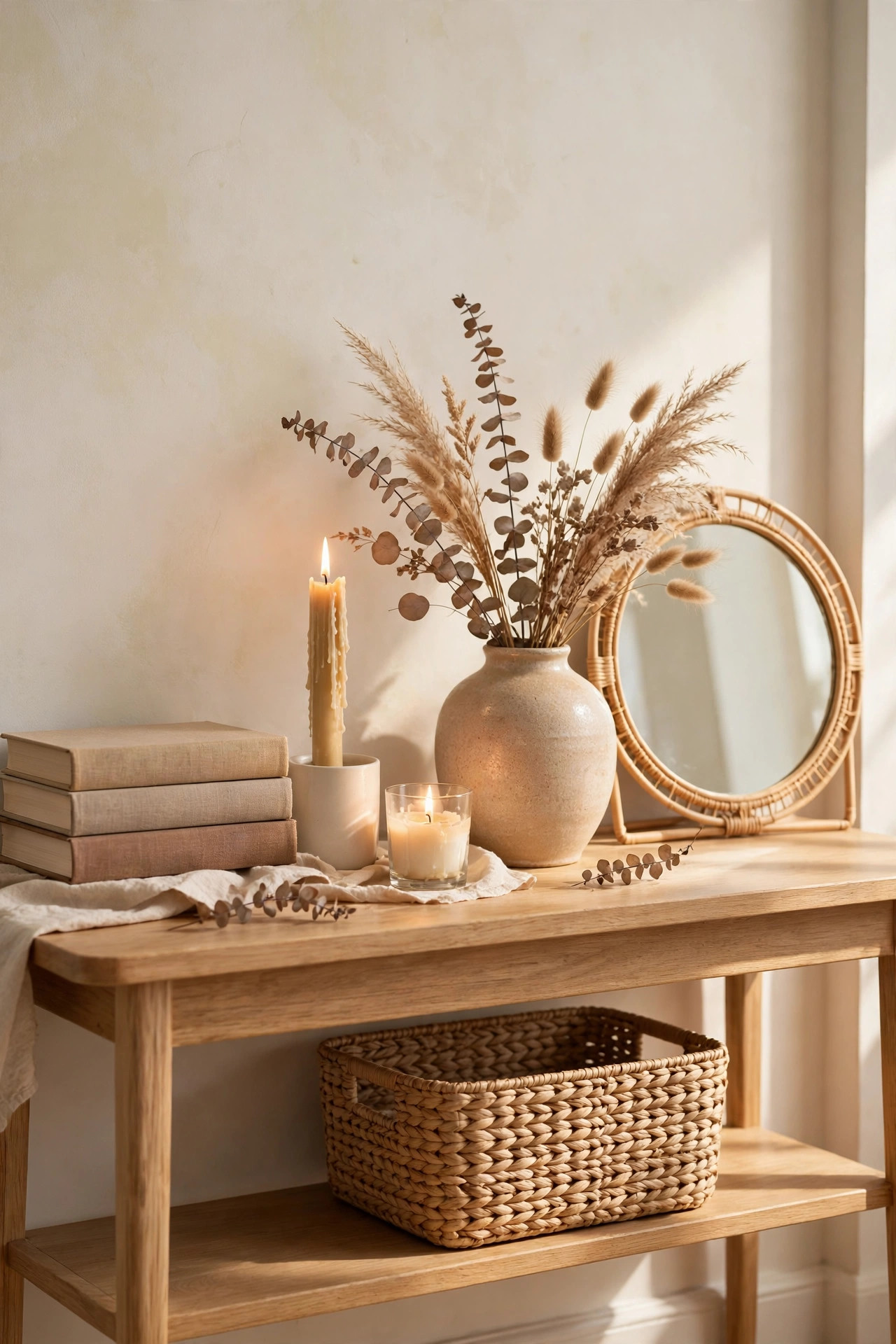
Expensive looking decor is rarely about spending a lot of money. It is about making intentional choices: a calm color palette, good lighting, real texture, and a few well chosen pieces instead of a room full of random items. When you know the tricks, you can make a room look polished and high end on a small budget.
This guide covers the styling principles that make decor look expensive, and the specific low cost buys that deliver the most impact.
Start With a Calm, Cohesive Color Palette
The fastest way to make a room look cheap is to use too many colors and patterns at once. Expensive looking rooms usually use two or three colors, repeated consistently through the room. Choose a neutral base, like warm white, soft grey, or warm beige, then add one accent color and one metallic or natural wood tone.
For example, a living room in warm white, sage green, and light oak looks calm and expensive. A bedroom in soft white, dusty blue, and brushed brass looks polished. A dining area in warm greige, terracotta, and black looks modern and intentional.
Repeat each color at least three times in the room: in the cushions, in the art, in a vase, in a throw. Repetition is what makes a palette feel deliberate instead of accidental. Avoid buying decor in random colors just because it is on sale. If it does not fit your palette, it will look out of place no matter how cheap it was.
Paint is the cheapest way to set a palette. One accent wall, or even just painting a piece of furniture, can anchor the whole room. A gallon of paint costs 25 to 40 dollars and can transform a room or several pieces of furniture.
Texture Is More Important Than Price
Texture is what makes a room feel rich. A room with only smooth, flat surfaces looks flat and cheap, even if the furniture is expensive. A room with layered textures looks warm and inviting, even if everything came from a discount store.
Mix textures deliberately. Pair a smooth leather or faux leather chair with a chunky knit throw. Pair a sleek glass vase with a woven basket. Pair linen cushion covers with a velvet cushion. The contrast between smooth and rough, soft and hard, matte and shiny is what makes a room feel styled.
Good budget textures include linen, cotton, wool, rattan, wood, ceramic, and glass. Avoid shiny plastic and thin polyester, because they look cheap up close and they do not age well. A linen cushion cover costs 8 to 15 dollars. A woven basket costs 10 to 20 dollars. A ceramic vase costs 10 to 25 dollars. Each one adds texture that makes the room feel more expensive.
Layer textiles on the bed and the sofa. A bed with a flat sheet, a duvet, a folded throw at the foot, and two or three cushions looks like a hotel bed. A sofa with a throw draped over one arm and three cushions in different textures looks styled. The layering is what creates the expensive look, not the price of any single item.
Lighting Changes Everything
Lighting is the single most overlooked factor in making a room look expensive. Harsh overhead lighting flattens everything and makes colors look dull. Warm, layered lighting makes the same room glow.
Use three light sources in each room: a main light, a task light, and an accent light. In a living room, that could be a ceiling light on a dimmer, a floor lamp beside the sofa, and a small table lamp on a side table. In a bedroom, it could be a ceiling light, a bedside lamp, and a string of warm fairy lights or a candle.
Warm bulbs are essential. Look for warm white bulbs around 2700 Kelvin. Cool white bulbs make a room feel like an office. A pair of warm bulbs costs under 10 dollars, and the difference is immediate.
Lampshades matter too. A clean, simple lampshade in linen or cotton looks more expensive than a shiny or patterned shade. If you find a cheap lamp with an ugly shade, replace just the shade for 10 to 15 dollars. The lamp base can be plain and simple, as long as the shade is good.
Candles add warmth and a soft glow in the evening. A few candles in simple glass holders cost under 10 dollars and make a room feel cozy and intentional. Use them on a coffee table, a dining table, or a bathroom shelf.
Buy Less, Choose Better
Expensive looking rooms are not full of stuff. They have fewer items, and each item earns its place. A room with ten random decorative objects looks cluttered. A room with three well chosen objects looks curated.
When you shop, ask yourself three questions. Does it fit my color palette? Is it made from a material that looks good up close? Will I still like it in a year? If the answer to any question is no, do not buy it, even if it is cheap. A cheap item that does not fit is not a bargain. It is clutter.
Shop second hand first for the pieces that look expensive. Thrift stores, charity shops, and local buy and sell groups are full of solid wood furniture, ceramic vases, brass candlesticks, and framed art that cost a fraction of their original price. A solid wood side table for 20 dollars looks far more expensive than a new flat pack table for 50 dollars. Clean second hand items thoroughly, and they will look like new.
Look for items with weight and substance. A heavy ceramic vase feels expensive. A light plastic vase does not. A thick, well made cushion cover feels expensive. A thin, flimsy cover does not. Pick items up before you buy them. Weight is often a good clue to quality.
Style in Groups of Three
Styling is a skill, and the simplest rule is to group items in threes. On a coffee table, use one tall item, one medium item, and one low item. On a shelf, use a stack of books, a small vase, and a candle. On a side table, use a lamp, a small plant, and a book.
Vary the heights in each group. Items that are all the same height look flat. Items at different heights create visual interest and look intentional. Leave empty space around each group. Empty space is not wasted space. It is what makes the items in the group stand out.
Use books as decor. A stack of two or three books with a small object on top looks styled and costs nothing if you already own the books. Turn the books so the spines face the wall if the covers do not fit your palette, or use books with neutral covers. Books add height, color, and personality to a shelf or a table.
Large Art and Mirrors Make a Big Impact
One large piece of art makes a room look more expensive than a wall of small frames. A large print, a large mirror, or a large woven wall hanging fills the wall and creates a focal point. A large piece of art costs 20 to 40 dollars to print and frame, or you can find large second hand art for a similar price.
Mirrors are especially effective. A large mirror makes a room feel bigger and brighter, and it looks expensive when the frame is simple and clean. A large leaning mirror costs 30 to 50 dollars second hand. A set of smaller mirrors in matching frames can work too, but keep the frames consistent.
Frame your art well. A simple black or wood frame with a white mat around the print makes even a cheap print look like gallery art. A print without a frame, or in a flimsy plastic frame, looks cheap. Spend a little more on the frame, and the art inside will look better.
Small Details That Add Up
Details are what separate a room that looks nice from a room that looks expensive. Match your hardware: if your lamp is brass, choose brass handles or a brass picture frame. If your furniture is black metal, choose black frames and black candle holders. Consistency in metals makes a room feel designed.
Hide cables and clutter. A cable box that hides power strips costs 10 to 15 dollars and removes a major source of visual mess. A basket that holds remote controls, chargers, and magazines keeps surfaces clear. A tidy room always looks more expensive than a cluttered room, no matter what is in it.
Add a touch of nature. A real plant, a vase of fresh flowers, or a bowl of fruit on a dining table makes a room feel alive. A small plant costs 8 to 15 dollars. A bunch of fresh flowers costs 5 to 10 dollars and lasts a week. If you cannot keep plants alive, one good quality fake plant is better than a dead real one.
Keep your home clean and well maintained. Clean windows, dusted shelves, and a vacuumed floor make any room look better. No amount of decor can compensate for a dirty room.
Expensive looking decor is not about a big budget. It is about a calm palette, layered texture, warm lighting, fewer but better items, and thoughtful styling. Start with one room, choose your palette, fix the lighting, add texture, and style in groups of three. You will be surprised how much more expensive your home looks, and how little it cost to get there.