A tiny bedroom can feel cramped and cluttered, or it can feel cozy and calm. The difference is rarely the size of the room. It is the choices you make about the bed, the colors, the light, and where everything lives. A few smart changes can make the same room feel noticeably bigger, without knocking down a wall or buying expensive furniture.
This guide covers the changes that make the biggest visual difference first, so you can start with the ones that cost nothing.
Place the Bed First, Then Everything Else
The bed is the largest piece of furniture in the room, so its position decides how the whole room feels. In most tiny bedrooms, the best spot is against the longest wall, centered if possible, with a small gap on each side for a bedside table or a shelf. Pushing the bed into a corner can free floor space, and it works well in very small rooms, but it makes making the bed harder and can make the room feel boxed in.
Leave a clear path from the door to the bed and from the bed to the closet. If you have to climb over furniture to get to the window or the wardrobe, the layout is wrong. Walk through the room and notice where you bump into things. Those are the spots to fix first.
Choose the right size bed for the room. A queen bed in a room that can only fit a double will dominate the space and leave no room for anything else. A double bed with good storage underneath is often a better choice than a queen bed with no storage and no space around it. If two people share the room, a queen is worth the trade off, but keep the other furniture minimal to compensate.
Light Colors Make the Room Feel Larger
Color has a real effect on how big a room feels. Light, warm colors reflect light and make walls feel farther away. Dark colors absorb light and make walls feel closer. In a tiny bedroom, light colors are your friend.
Paint the walls a soft white, warm off white, pale sage, or light greige. Keep the ceiling white and the trim the same color as the walls, or slightly lighter, so the eye does not stop at a harsh line. If you love dark colors, use them in small doses: a dark cushion, a dark throw, or a dark framed print, not a whole dark wall.
Bedding matters as much as wall color. White or light colored bedding makes the bed look lighter and less bulky. A dark, heavy bedspread can make the bed look like a huge dark block in the middle of the room. Layer light bedding with a textured throw in a slightly deeper color for warmth without the visual weight.
If you rent and cannot paint, light bedding, light curtains, and light colored furniture have a similar effect. The goal is to keep the largest surfaces in the room light, so the room feels airy.
Use Mirrors and Light to Open the Space
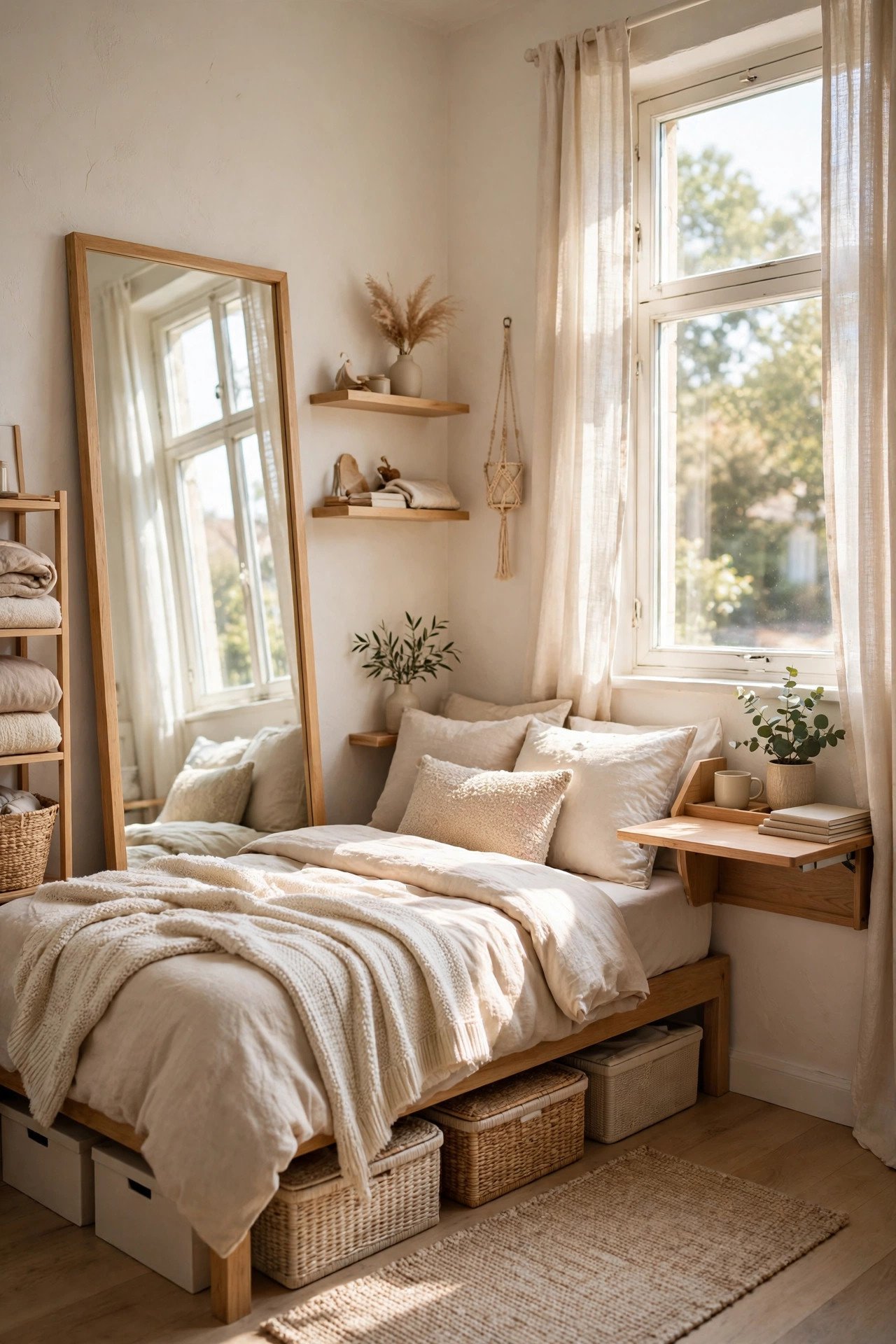
A large mirror is the cheapest way to make a tiny bedroom feel bigger. It reflects light and creates the illusion of depth. A full length mirror leaned against the wall, or hung on the back of the door, works well. A mirror opposite the window doubles the natural light coming in.
Do not clutter the room with lots of small mirrors. One large mirror has a much bigger effect than five small ones. Keep the mirror clean, because a dusty mirror reflects dull light instead of bright light.
Lighting matters just as much. A single harsh overhead light makes a small room feel flat and small. Use two or three softer light sources instead: a bedside lamp, a small lamp on a dresser, and a warm string of lights or a candle. Warm light, around 2700 Kelvin, feels cozy. Cool light feels clinical. Choose warm bulbs for the bedroom.
Keep the windows clear. Heavy, dark curtains block light and make the room feel closed in. Light, sheer curtains let light through while still giving privacy. Hang the curtain rod high, close to the ceiling, and let the curtains fall to the floor. Long curtains make the ceiling look higher, which makes the whole room feel taller.
Choose Furniture That Fits the Room
Oversized furniture is the fastest way to make a tiny bedroom feel cramped. A huge wardrobe, a wide dresser, and a large bedside table will fill the room before you have added anything else. Choose furniture that fits the scale of the room.
A tall, narrow wardrobe uses vertical space and takes up less floor area than a wide, low wardrobe. A floating bedside shelf takes up no floor space at all and holds a phone, a book, and a glass of water. A small stool can work as a bedside table and as extra seating.
Furniture with legs makes a room feel bigger than furniture that sits flat on the floor. When you can see floor underneath a bed, a dresser, or a chair, your eye reads the room as larger. A bed frame on legs, even short ones, looks lighter than a bed that sits directly on the floor. The same applies to a dresser or a nightstand.
Avoid matching bedroom sets in a tiny room. A full matching set looks heavy and takes up visual space. Mix one or two pieces you already own with a simpler piece in a lighter color. The mix looks more relaxed and less bulky.
Storage That Hides Clutter
Clutter makes a small room feel smaller, because every object competes for your attention. The goal is to have as little as possible visible. Under bed storage is the best hidden storage in a bedroom. Flat boxes on wheels hold out of season clothes, spare bedding, and shoes. A bed frame with drawers does the same job more neatly.
Use the space above the wardrobe for items you use rarely, in labeled boxes. Use the inside of the wardrobe door for hooks that hold bags, belts, or tomorrow's outfit. Keep the top of the dresser clear except for one or two items, like a lamp and a small plant. A clear dresser top makes the whole room feel calmer.
A laundry basket with a lid is worth the small cost. An open pile of laundry, or a laundry basket overflowing with clothes, makes the room look messy even when everything else is tidy. Choose a basket that fits in the closet or in a corner, and keep the lid closed.
Keep the bed made. It sounds simple, but an unmade bed makes the whole room look untidy, because the bed is the largest surface in the room. Making the bed takes two minutes in the morning, and it sets the tone for the rest of the room.
Small Tricks That Add Up
Keep the floor as clear as possible. Shoes belong in the closet or by the door, not scattered around the bedroom. Cables belong in a small basket or behind furniture, not trailing across the floor. A clear floor makes the room feel larger, even if the floor area has not changed.
Use vertical space. A tall, narrow shelf in a corner holds books, plants, and personal items without taking up much floor space. A shelf above the door holds items you rarely use. Hooks on the wall hold tomorrow's outfit, a bag, or a hat, and they keep those items off the bed and off the floor.
Keep decor simple. One large framed print above the bed looks better than a wall covered in small frames. One plant on a shelf looks better than five small plants scattered around the room. In a tiny bedroom, less decor usually looks more expensive, because each piece has room to breathe.
Match your bedding, curtains, and rug in a simple color palette of two or three colors. A calm palette makes the room feel cohesive. Too many colors and patterns make a small room feel busy and chaotic.
A Tiny Bedroom Can Feel Like a Retreat
A tiny bedroom does not need to feel like a compromise. With the bed in the right place, light colors, a large mirror, furniture that fits, and hidden storage, the same room can feel calm, spacious, and restful. Start with the free changes: move the bed, clear the floor, make the bed every morning, and take down heavy curtains. Then add the low cost changes: light bedding, a mirror, and under bed storage. Within a weekend, your tiny bedroom can feel like a place you actually want to spend time in, not just a place you sleep.